(free version) Metashamanics
A Summary Overview


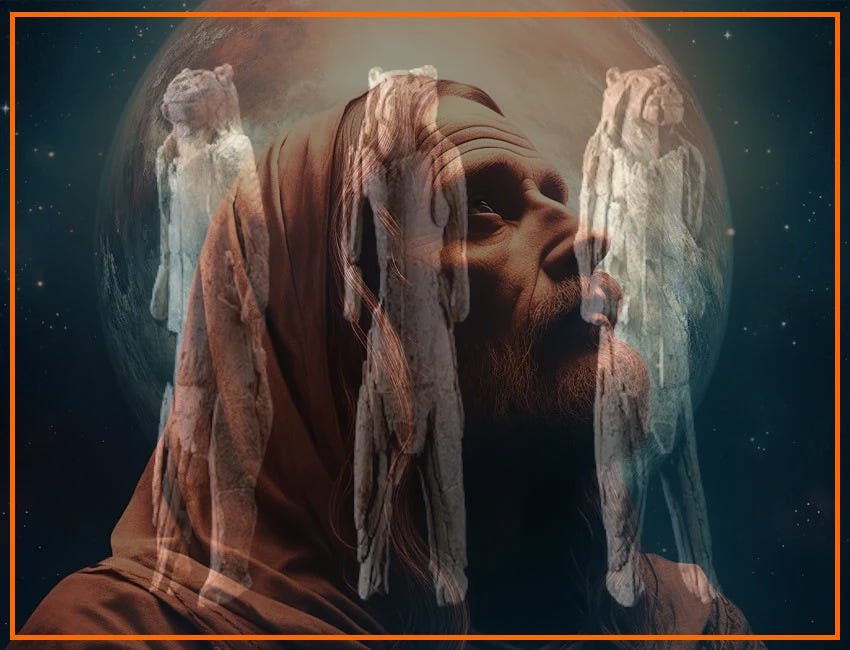
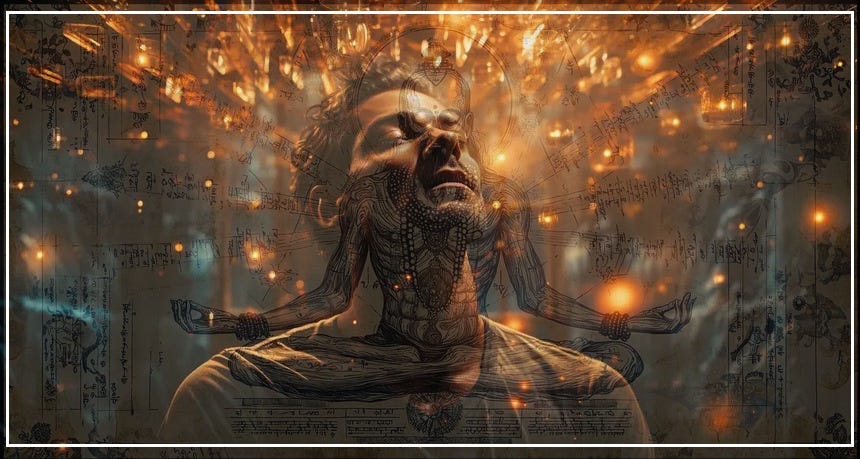
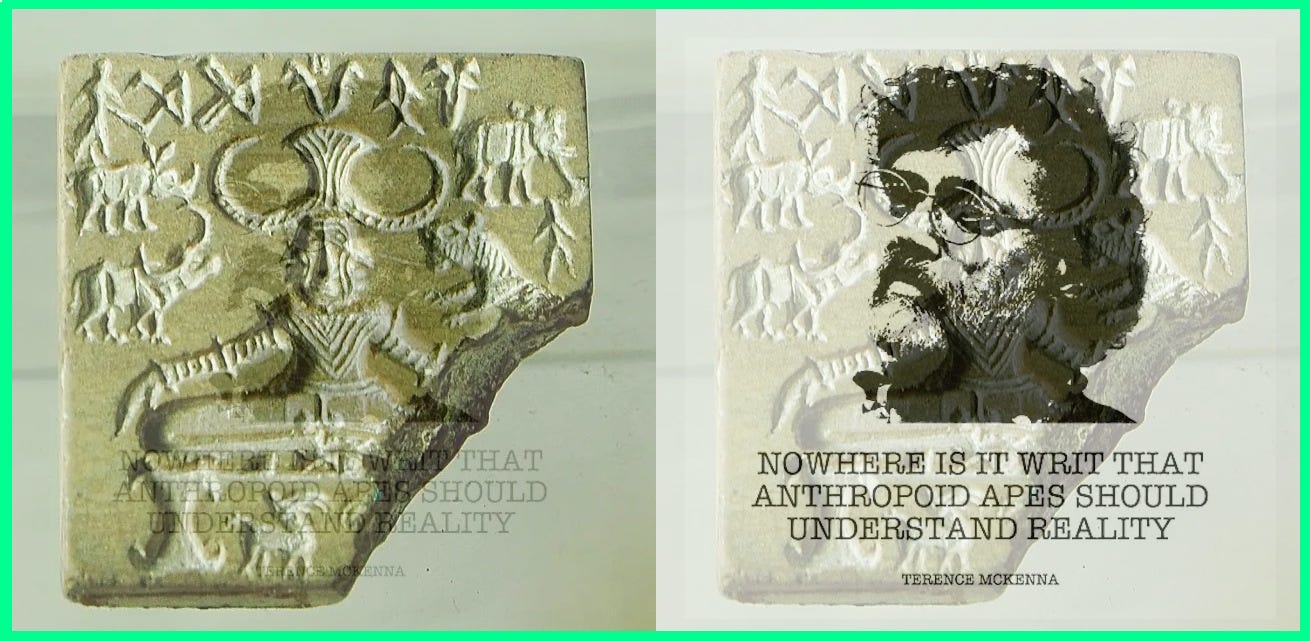
(This article is unusually straightforward. Some of the ideas in this article will be familiar to regular readers but I receive so many requests for a “short overview” of my thoughts on the shamanic that I have written this succinct and general introduction. Although the text is relatively short — as promised — I have taken this opportunity to supplement it with way too many images whose slightly disorienting overlays offer a visual flavoring corresponding to these concepts. As usual, paying subscribers receive early versions, audio versions by the author, and occasional bonus essays.)

I have never called myself a shaman. People occasionally refer to me that way either because they are being playful or perhaps because they want me to talk about the shamanic turn in spirituality, philosophy, and developmental psychology.
Usually, I say “shamanism” in quotes. Or else I say “something-like-shamanism” or I say, “whatever we want to call it.” My own interest revolves around a study (that I made up) called metashamanics.
What does the endlessly obtuse prefix meta- add to our discussion? It points to three things. Firstly, that we are viewing the shamanic dimensions through a metamodern, coherent pluralist, integrative, or post-postmodern lens. Secondly, the skill sets associated with shamanic training correspond closely to the cluster of problems that define our collective “metacrisis.” And thirdly, that we are not primarily interested in people who are culturally or personally identified as shamans but rather in the whole category of people from whom diverse shamanic traditions are generated, regenerated, and evolved.
Two kinds of people typically call themselves shamans:
The first are individuals of varying skill, morality, and sensitivity who are symbolically empowered as practical medicine workers in specific ethnic or tribal modalities. These folks are often, but not necessarily, associated with entheogens, therapeutic imaginal journeying, dancing, drumming, and chanting.
The other kind of person is a fairly naive contemporary individual who just spent a weekend in San Francisco to get a dubious shamanism certificate, or who plays a colorful didgeridoo on the sidewalk, or who has an exaggerated view of their own profound authenticity and intuitive capacity to inspect magical dream worlds.
The study of Metashamanics deals instead with shamanoids. This is a speculative set of neurodiversities that would predispose a person to be selected for esoteric training and community wisdom service in a healthy tribal context. They are defined by a cluster of capacities and predilections that overlap with, but are not identical to, mysticism, spirituality, or inner developmental complexification.
In theories of developmental psychology, it is commonly asserted that human beings, in fortunate circumstances, grow through phases of sensibility and cognitive skill development that are characterized by increasing nuance, depth, expansiveness, and the integration of diverse perspectives. Such growth would increasingly enfold the apprehensions and intuitions associated with the organic hierophantic caste (“shamans”). Conversely, the attitudes and drives of the natural esoteric percentage of the population typically place them in circumstances that make developmental inner growth more likely. Both these factors create a large zone of overlap between shamanism and developmentalism, but there is no necessary identity between this typology and the general concept of vertical cognitive enrichment.
Nor is there any necessity to use the word shaman. We are describing a socially and evolutionarily conserved range of human sensemaking. If the word sounds too masculine, we could say witch. If that sounds too magical, we could say gnostic intermediary. If that still sounds too pagan or heretical, we could say natural priest or organic imam or embodied theologian.
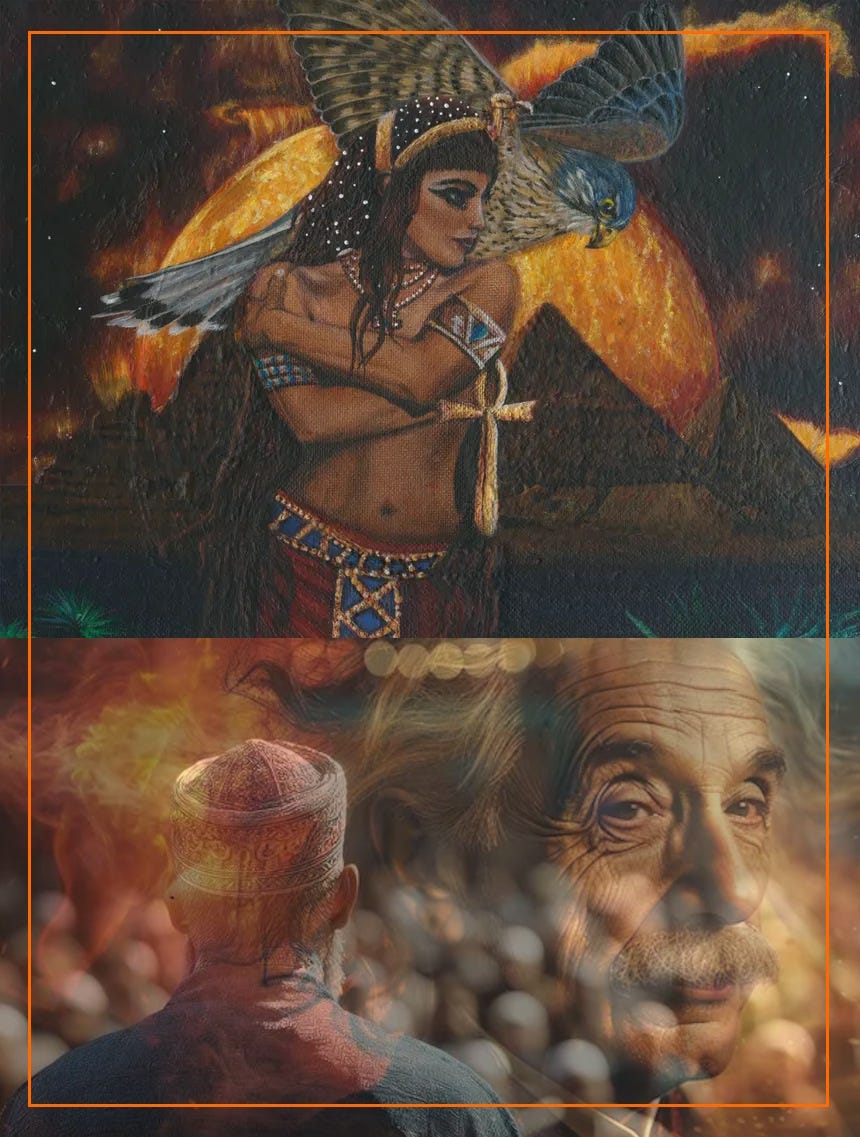
The terminology is not terribly significant. What matters is a higher-than-average presentation of several of the following normal human inclinations: attempt to access trance states, generative critique of social rituals, allurement to thresholds and liminal states, assumption that the sacred & the natural coincide, experimental relationships with imaginal entities, training of subconscious intelligence, perception of subjectivity as plural, playful indifference to social and gender roles, obsession with intersubjective praxis, study of ordeals, competence in somatic interoception, creative production of religious forms, endless curiosity about the coherence of nonlinear patterns, strong emotional responses to human-nature interactions, experience of Self as Other, peculiarity or hyperindividuation, bioregional and place-based thinking, surrealism, fluid transformations between moods and roles, penchant for inter-tribal diplomacy, deep interest in the anomalous, paradoxical, absurd or weird, etc.
That’s a big “etc.” Such a list could be significantly expanded. These attributes and inclinations are widely distributed across human beings, but they predominate in individuals whom we might describe as esoteric in their behavior, regardless of their local social training.
They might show up in any culture or any profession. However, we can identify several social genres that are frequently cited as being “downstream” from the archaic wisdom specialist: psychologist, yogi, performance artist, philosopher, horror filmmaker, fantasy author, ecologist, complexity scientist, UAP researcher, parapsychologist, herbalist, archetypologist, trance musician, somatic worker, tantrika, intuitive healer, participatory anthropologist, etc. That’s an even bigger “etc.” A good chunk of people in these and related domains share a common personal history, natural sensibility, and cosmic outlook that is as much typological as developmental.
A neurogenetic category crosses these social designations in a non-trivial manner. It is an identity and/or role that may be as pertinent to personal self-actualization and community flourishing as are designations based on gender, sexuality, ethnicity, neurodivergence, etc. In the absence of this identity concept, the relevant data to study them is currently distributed across other categories. There are existing studies on schizotypal genetics, ufo abductees, right-brained sensemaking, visionary experience, differential processing of psychedelics, and people high in trait openness, among others, that may contain much of the basis for an emerging statistical examination of this subpopulation.

Relatively consistent subtypes or specializations may exist within this class of people. For example, the use of entheogens and “plant medicine” is common but not ubiquitous among shamans. Likewise, drumming and rhythmic trance, imaginal therapeutic journeying, public performance, esoteric sexuality, philosophical training, channeling, working with animals, etc., represent potential subcategories that would be (a) perpendicular to developmental maturation and psychological health, and (b) necessary inclusions within a broadly self-aware community of contemporary shamanoids.
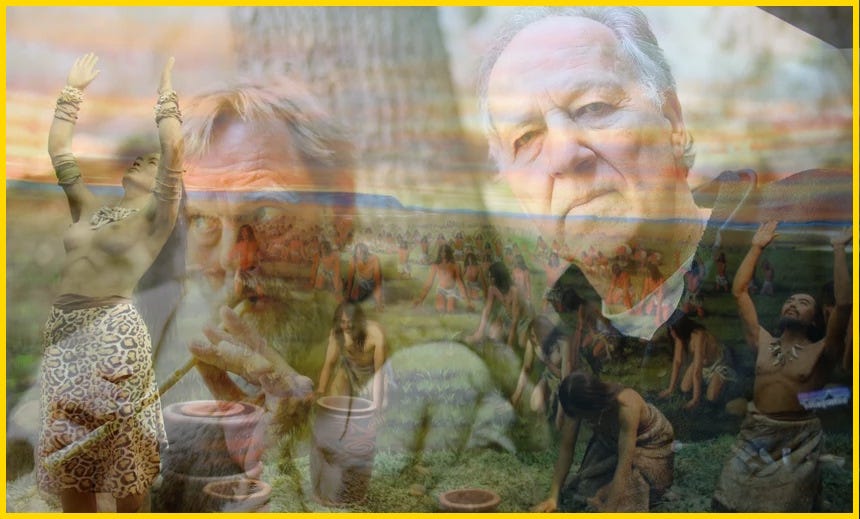
One proposal from metashamanics is that curated gatherings of shamanoids would allow a bottom-up educational approach to sharing lore about successful methods, dangers, and needs for this population in the contemporary environment. It would likely also encourage an expanding sense of self-recognition and social worth, along with a richer awareness of internal diversity and subtypes than may have been available under archaic and indigenous conditions. This inter-subtype socializing would help emotionally and socially stabilize such individuals by providing a broader notion of where their own inclinations fit into a more diverse context. Such an idea represents one approach to interpersonally extending the personal notion of an endo-sourced wisdom.
While shamanoids have both generated and been drawn to various wisdom lineages over the course of history, there is also an important way in which they demonstrate an internal pedagogy. Many of their predilections (such as a drive to occupy threshold, ambiguous, and contradictory positions) may indicate a healthy instinct for the circumstances that catalyze and evoke an inborn neurogenetic algorithm for shamanic development. It is as if they contain the seeds of their own curriculum. The importance of mentorship, community, and general education is crucial, but the basic orientation of those set-ups is toward providing the situations, templates, encouragements, and challenges necessary for such people to unfold a “dharma” from their own sensibility and experimental interactions with ecosystems, entities, and altered states.
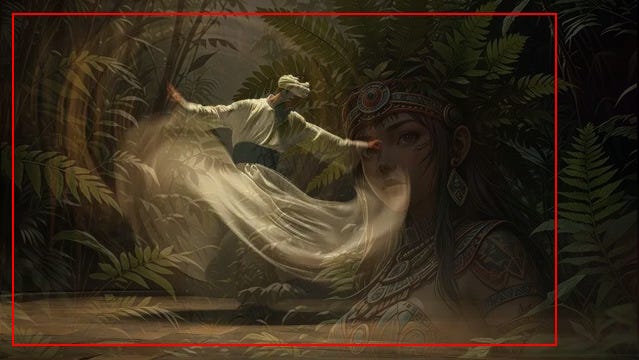
We must study not only the intra-relations within this category but also the social interrelations between these characters and the general “village.” Shaman is not a status or rank. Nor does it represent a set of capacities that are utterly absent from the common population. These are specialists within the communal context who both prioritize particular types of sensemaking and elicit, garden, and harvest that kind of intelligence from others.
Insofar as we might think of shamanoids as potentially playing a critical role in the cultivation of collective intelligence and collective sapience, we must examine the contemporary broken circuit between the natural esoteric and exoteric demographics of local and global villages.
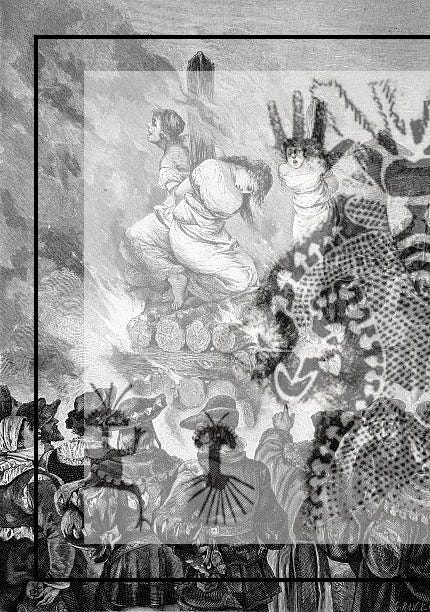
The periodically abusive and persecuting stance of dogmatic and bureaucratic monotheists toward natural priests and priestesses, as well as the modern disregard, marginalization, and psychiatrization of shamanoids, has led to a contemporary situation in which these tendencies are ignored and demeaned in everyday socio-economic and political affairs. That failure on the part of the exoteric population to recognize and appreciate the necessity of these characters is reciprocated by a frequently occurring defiant, reactive, and judgmental attitude within shamanoid communities. That attitude could be characterized as gnostic dismissiveness. We (the esoteric subset) are uniquely awakened and conscious and authentically attuned to living reality while “they” are sleeping, ignorant, deluded, egoic, et al. They have all our same capacities but stupidly fail to engage them. Thus, they can be either disregarded, manipulated, or taught to experience reality the same way that we do. This represents the other side of the broken circuit between esoteric and exoteric natural populations.
To heal this rift requires three things. Firstly, there must be conceptual recognition and social valorization of the mature and benign shamanoid type as a crucial component of organizational and social wisdom. Secondly, there must be a cultivation of communal participation, human maturation, and collective service among the esoterics. Thirdly, there must be a profound recognition of the need for mesoteric people who are drawn in both directions and can operate as institutional and populist translators involved in the ongoing establishment of functional infrastructures between the shamanoids and the other necessary types within a functional human social field.
Under normal (i.e., relatively healthy and unchanging) human social conditions, the shamanoids, if successfully enabled to self-train in effective relationships, are specialized gardeners of the sacred production of civic intelligence through special contexts, ideas, and ritual ordeals. They are needed for the ordinary production of healthy and meaningful multi-epistemic human cultural fields. However, the contemporary global situation poses a unique set of challenges that also require a new orientation among shamanoids.
In our “global village,” we face a cluster of interrelated crises operating at transpersonal scales. In particular, there is a disregulation of general human activity with respect to the planetary biosphere. There is also the introduction of new quasi-sentient nonhuman intelligence (e.g. AIs), a massive drug crisis and the normalization of psychedelics, a mental illness epidemic, a wisdom famine, lack of sacred shared civic identity, the inadequacy of our maturational rituals, blindness to nonlinear sensemaking, a socio-economic indifference to affective, subconscious and inuitive complexity, a neo-liberal inablity to alilgn libido toward depth-oriented culture production, an anxious unreadiess for the high strangeness that new technologies are wreaking upon the world, a need to prepare for the cosmic extension of humanity and the biosphere through trans-planetary technologies, a social crisis around gender transformations, a technologically-incepted need for naturalized attention training, digitally-mediated retribalization dangers, strong need to produce coherent intersubecitve fields, etc. We require a healthy, mature, complex, interlinked, and updated subculture of shamanoids to play a central role in leveraging their ancient instincts and skill sets toward the correlated contemporary crises that strongly suggest that a planetary-scale shamanic mobilization is necessary.
This does not mean that all wisdom traditions should be sacrificed in favor of shamanism, but rather that a shamanic turn is necessary within all traditions. From Buddhism to Christianity, from Secularism to Islam, from Hinduism to Agnosticism to Scientology, the “soul-training” and “sacred production” activities of human civilization must prioritize (a) ecology (b) trans-rational states c) integration of subconscious intelligence (d) unfolding natural complexity, (e) new ritual and ordeal production, and (f) organic rather than dogmatic selection of hierophatic workers.
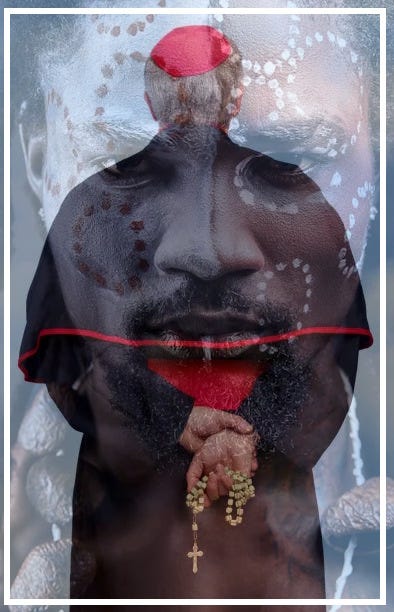
It would be a mistake to think of people with these organic hierophatic dispositions as being solely involved in “nature mysticism” or the “subtle realm.” Just as shamanoids represent a typology that is orthogonal to developmental cognition, they also operate across all kinds of state-domains. Thus, the broad categories of state experiences that we often classify as gross, subtle, causal, and nondual, may all show up as particular specializations among diverse shamanoid populations.
There is also a political dimension to the consideration of human strangeness workers. Using a semi-mythologized description of anthropological history, we could say that under normal, relatively invariant conditions, the political organization of the collective intelligence and operations of the tribe, village, or civilization, can be well handled by healthy, experienced, informed, and relational chieftains and matriarchs. However, under unsettled, peculiar, or rapidly changing conditions, the collective unconscious of the population may naturally turn toward charismatic shamanoids as political agents who suggest a capacity to operate within-and-beyond our traditions and normative protocols. Someone who can utilize coincidences, subconscious sensemaking, astonishment, weird alliances, etc., as forms of collective adaptation and reorganization.

Since the contemporary environment shows many signs of being in exactly that kind of condition, we would expect that a strong trans-rational instinct would arise in human populations seeking shamanic leadership. And if the population is deprived, through seemingly sensible bureaucratic and procedural mechanisms, of healthy shamanic weirdos willing to play at the political level, the people may default to the closest approximation — even to potentially wounded, untrained, narrowly functional, regressive, charismatic shamanoids.
Although it would be reductive to think in terms of “good” and “bad” shamans, we must be open to exploring risky and unsettling versions of shamanic development on a continuum alongside benign and idealized variants. It is certainly possible to have truncated, pathological, or ideologically captured versions of this type of sensemaking.
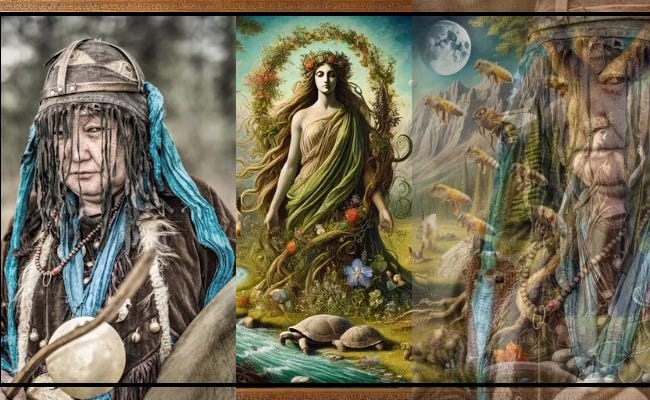
In the early anthropological studies of shamans by people such as Mircea Eliade, it was common to cite a saying that medicine people were those who had cured themselves of a sickness and could then cure others. We must treat the nature of this sickness quite flexibly such that it could potentially incorporate social anxiety, hypersensitivity, apophenia, paranoia, standard social narcissism, excessive suggestibility, ADHD, somatic intensities, etc. And the nature of the pertinent self-healing or recovery must also be thought broadly, such that it could include effective and self-empowering “solutions” that may deviate not only from common psychiatric renormalization procedures but also potentially from socially received assumptions about spiritual and psycho-emotional well-being.
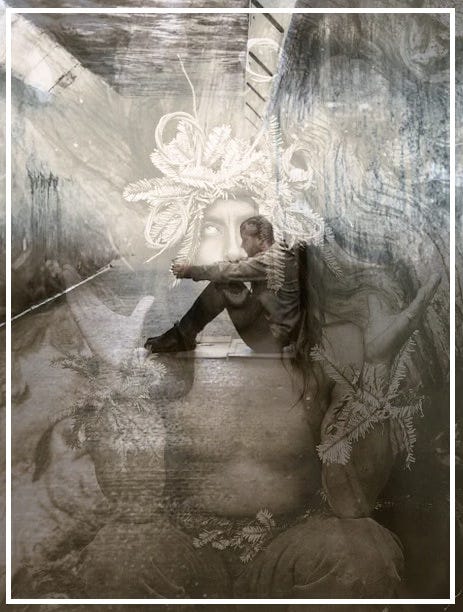
Speaking in terms of an archaic futurist mythology, we might imagine healthy shamanoid networks involved in a benign collective project such as the ongoing tending of a cosmocentric imaginal biosphere. Or the intersubjective work of producing a naturalized trans-noospheric humanity that intelligently serves and transforms the Gaian system of which it is an important organ.
We might also use new science, cognitive theory, and developmental orientations to specify shamanic functions. For example, a new practical animism could serve as the evocative interpersonal psychology described by 4E cognitive science. Here we can begin to ask questions concerning, for example, the metaphor of “spirits” as an efficient participatory framing for extended and embedded parts work.
Certainly, we do not and perhaps cannot know the role that actual Non-Human Intelligences (NHIs) — biospheric, cybernetic, and anomalous — might play in the unfolding of our species but we can say that there is a historically prominent subset of the population that is instinctively inclined toward such problems and the development of skills oriented toward maximizing benign outcomes.
It is almost certain that there will be a tremendous need in the near future for “esoteric diplomats” who can handle the subtle and sacred complexity between different human groups, different value orientations, and seemingly incommensurable worldviews and languages. These same kinds of people, who are dispositionally oriented to help produce a shared civic sacrality across different polarized tribal contexts, may also be able to extend those same skills to deal productively with various NHIs such as animals, plants, ecosystems, subtle beings, aliens, computational intelligences, irreducible algorithms, etc.
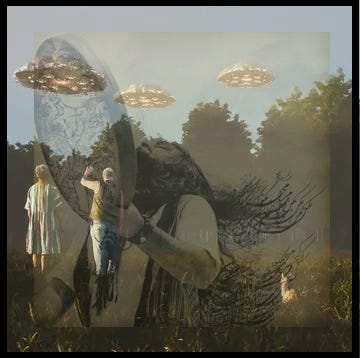
Metashamanics must be able to incorporate emerging cultural factors as well as the evocative narrative and memetic concepts that connect shamanoids, general populations, and complex phenomena. However, it must also begin a more rigorous statistical, behavioral, and neurological probe into this typology. Suggestions have been made concerning the neuropsychological traits of this type. It has been postulated, for example, that they are relatively likely to maintain clarity of function during intense psychedelic and analogous perturbations of brain chemistry. We would probably want to supplement such notions with the idea that these individuals may also exhibit hypersensitivity and more-than-normal disorientation relative to even small stimuli.
Another proposal about the shamanoid brain is that it may exhibit unusual interconnection between different sensemaking modules. A disposition toward moderate synaesthia, across sensory systems but also across cognitive systems, may be one of many ways in which particular individuals are born tilted toward blended and synergetic capacities. This tilt might also explain the tendency to seek out and practice certain kinds of esoteric training systems. The suggestions derived from “integral” philosophies, and from spiritual systems such as the Gurdjieffian Fourth Way, hint at a significant role played by the intentional interweaving of different intelligences and behavioral-affective tendencies within individuals. It is worth exploring whether a pre-existing amplification of intersystemic neural circulation predisposes people toward a “path” that pursues such blending as an intentional goal.
The collection of existing data and hypotheses, as well as the encouragement and organizing of new research in this area, would likely be a key element of metashamanics.
If we, as the European philosophers Bard and Soderqvist do, divide the inherited human discourse into logos, mythos, and pathos, we may tend to distinguish shamanoids along these lines. While some human subpopulations tend to emphasize the laws of technical mastery and pragmatic survival, other groups (or moments) orient toward sensemaking through mythologized and dramaturgical socio-emotional cartoons concerning relationship dynamics. Shamanoids are likely to have critiques of both these trends. Finding themselves not only shapeshifting between them but also rejecting both in favor of frequent attunement to pathic intensities such as nonconceptual experience, complex antagonism, and the phenomenological “eternalization” of somatic and imaginal sensemaking.
Another interesting sociological feature is the possibility of shaman envy — or the generalized capitalist utilization of shamanoids to create an ever-unfolding commercial appetite for hyperindividualism, altered states, nonlinear flows, etc. This subsequently becomes idealized and simulated by non-shamanic consumer populations.
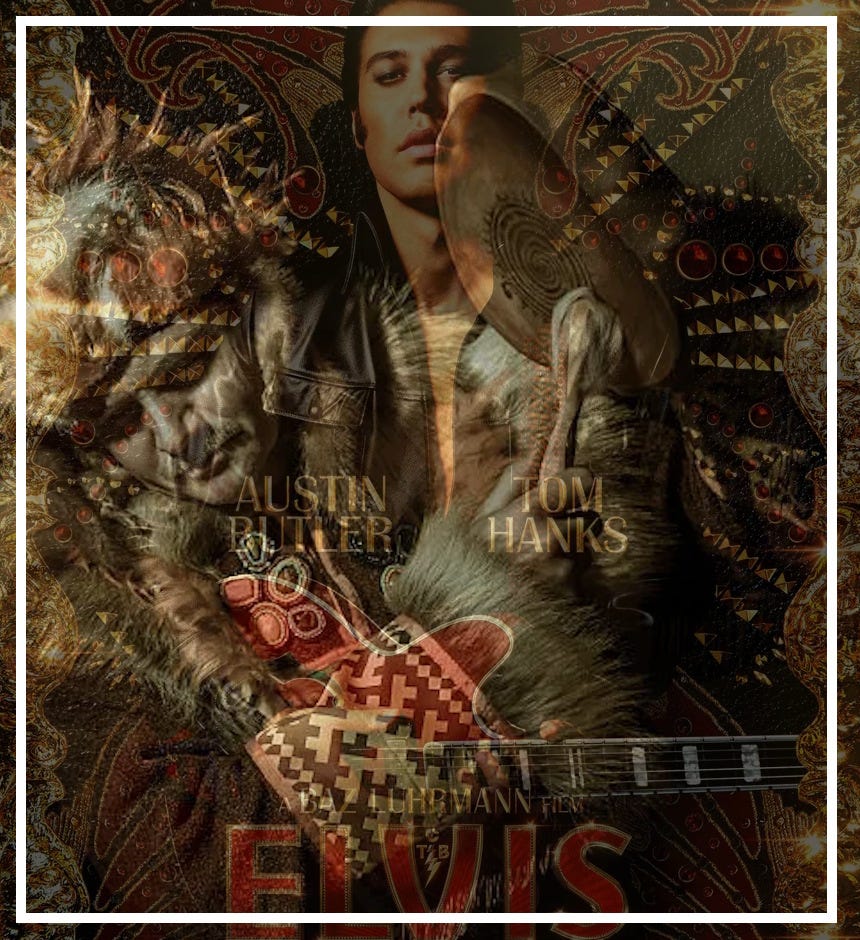
Baz Lurhmans’s film Elvis graphically depicts a unique individual who was naturally obsessed with costume changes, rhythmic trance induction, cultural transformation, the intersection between the sacred & erotic, indifference to standard identity boundaries, and the experimental psychology of drug experience, and who also specialized in the production of subtle energy transmission fields. Lacking any mature mentorship in these skill sets, he is captured, and slowly degraded, by a traumatized commercial culture worker who sells him to people who want to duplicate his style without being personally oriented in that direction. Pseudo-shamanic consumer populism. Maybe bad for everyone in the end?
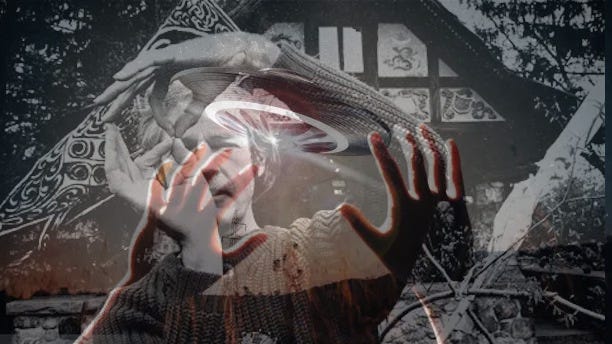
Even though I do not claim to be a shaman, I am clearly invested in clarifying and supporting these people, and obviously, I relate to their suggested characteristics.
Years ago, I visited my mother at her new home in the mountains of Puerto Rico. Climbing up the sloped yard toward the back of the property, I found myself weaving between strange holes dug by some ungodly tropical varmint in the soft, wet earth. Mother pointed out a clear path along the side of the field that she had built from large flat stones. I remember what I said:
“I don't want to know where the path is, I want to be better at instinctively avoiding holes.”
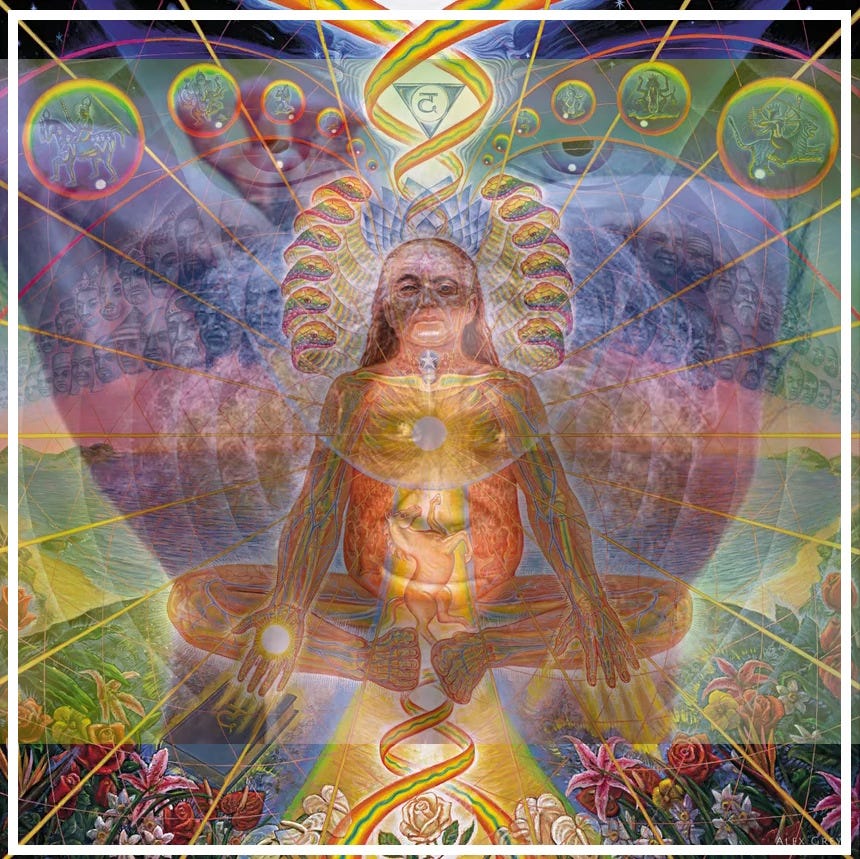
For me, the shamanic dimension largely involves the trust that we can get better at not knowing. That our unjustified guesses are not all equal, but rather they can become more intelligent and more effective. This is a sensibility that I have borne with me through many developmental, spiritual, and moral teachings. It has added an extra flavor to all of them. It is not merely the idea of intuition. There is a language of mystery.
More than this, more than my own temperament and conclusions, I feel deeply protective of these people and utterly convinced that we cannot solve our collective crises without a new recognition, interweaving, study, and social valorization of this special role within (and without) human communities.
Metashamanics.